
Arrest Warrants in Stonewall County
Under Texas law, an arrest warrant is written process from a magistrate or court. It directs an authorized officer to take a person into custody and bring them before the proper authority. That is a distinct document from a citation, a police note, or a DPS FTA report. Stonewall County publishes no public arrest-warrant roster or status database. The record route depends on the court and the cause. For a specific matter, ask the issuing clerk or magistrate's office for the public portions of the file.
Stonewall County Arrest Warrants Use Chapter 15
Texas Code of Criminal Procedure Chapter 15 defines an arrest warrant and sets its requisites: the named person or a sufficient description, the alleged offense, direction to an authorized officer, and a command to bring the accused before the proper authority. The file may also tie to a complaint or affidavit, a cause number, a judge, a bond order, and a return. The statute lets warrants execute anywhere in the state. That reach, though, does not create one county public search or say which local officer handles a given order in Stonewall County. Ask the issuing court or the Sheriff about current routing. The chapter explains the legal process; it does not publish a Stonewall warrant index. Read the primary source, Texas Code of Criminal Procedure Chapter 15.
Use the statute to understand the document, then confirm a case with its court.
What a Stonewall County Arrest Warrant Contains
Stonewall County publishes no sample form or warrant-number format of its own. A court record may hold the elements above, but fields vary, and a public index may show only part of the file. A cause number is the safest way to identify a known case.
| Case identifier | Cause number No Stonewall-specific warrant-number format was published. |
|---|---|
| Named person | Name or legally sufficient description as it appears in the court's public record. |
| Offense | The alleged offense or statute reference connected to the order. |
| Issuing authority | The magistrate or court that issued the process. |
| Bond or conditions | May be recorded separately; confirm current terms with the court. |
| Issue and return | Date and execution/return information if held and releasable. |
Stonewall County Search Warrants Are Different
An arrest warrant concerns a person and custody. A search warrant is different. It authorizes a qualifying search of a place or property, resting on probable cause and a sworn affidavit. After execution, the affidavit may become public under the statute, though sealing, timing, and law-enforcement exceptions can affect release. In Stonewall County, the issuing clerk and the investigating agency may each hold different parts of the record, so ask for the public portion of a specific executed warrant and name the cause, date, or agency if you know it. Keep private addresses and investigative details out of public forms. The rules appear in Texas Code of Criminal Procedure Chapter 18.
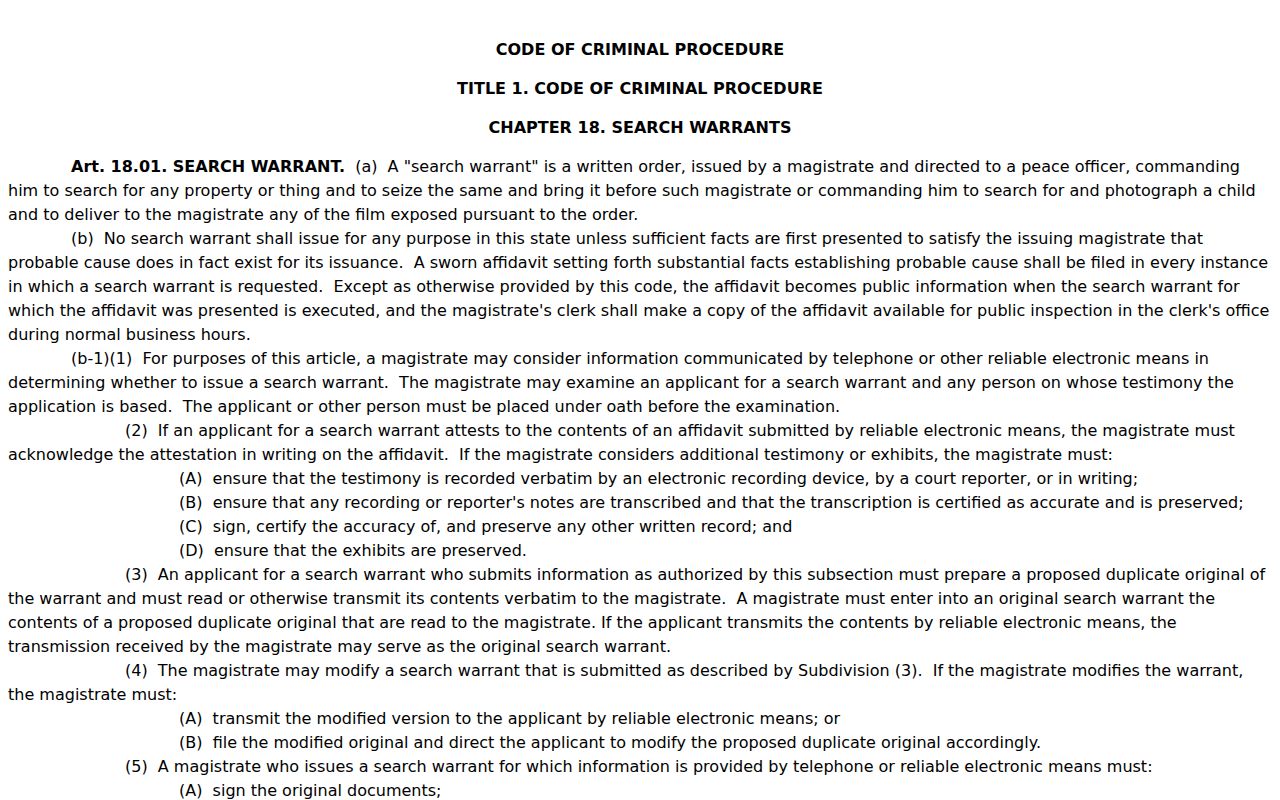
That chapter's access timing does not carry over to a Stonewall County arrest-warrant file without checking the record type first.
Stonewall County Arrest Warrants Served
Texas law lets authorized officers execute an arrest warrant. Stonewall County names no local warrant unit, service schedule, or universal walk-in surrender process. The Sheriff page gives the agency contact, but ask the issuing court which office holds the order and what procedure applies. After an arrest, expect booking, an appearance before a magistrate, and a bond or release decision. Do not test your status by approaching an officer or an unknown location. For a personal status question, call counsel and the court.
Stonewall County Service Details Are Limited
The official Sheriff page lists an office number and a courthouse contact route, but it does not say who serves each Stonewall County warrant, give surrender instructions, or post bond-window hours. City police, sheriff, and court roles differ by case. A general agency contact is no promise that staff can resolve a court status by phone. Use the sheriff page to ask which office handles an execution or jail-record question, and contact the issuing court for the case file. The Stonewall County Sheriff contact page provides the current official route. It is an agency contact source, not a public warrant roster. For justice and municipal court context, read current Chapter 45A procedure.
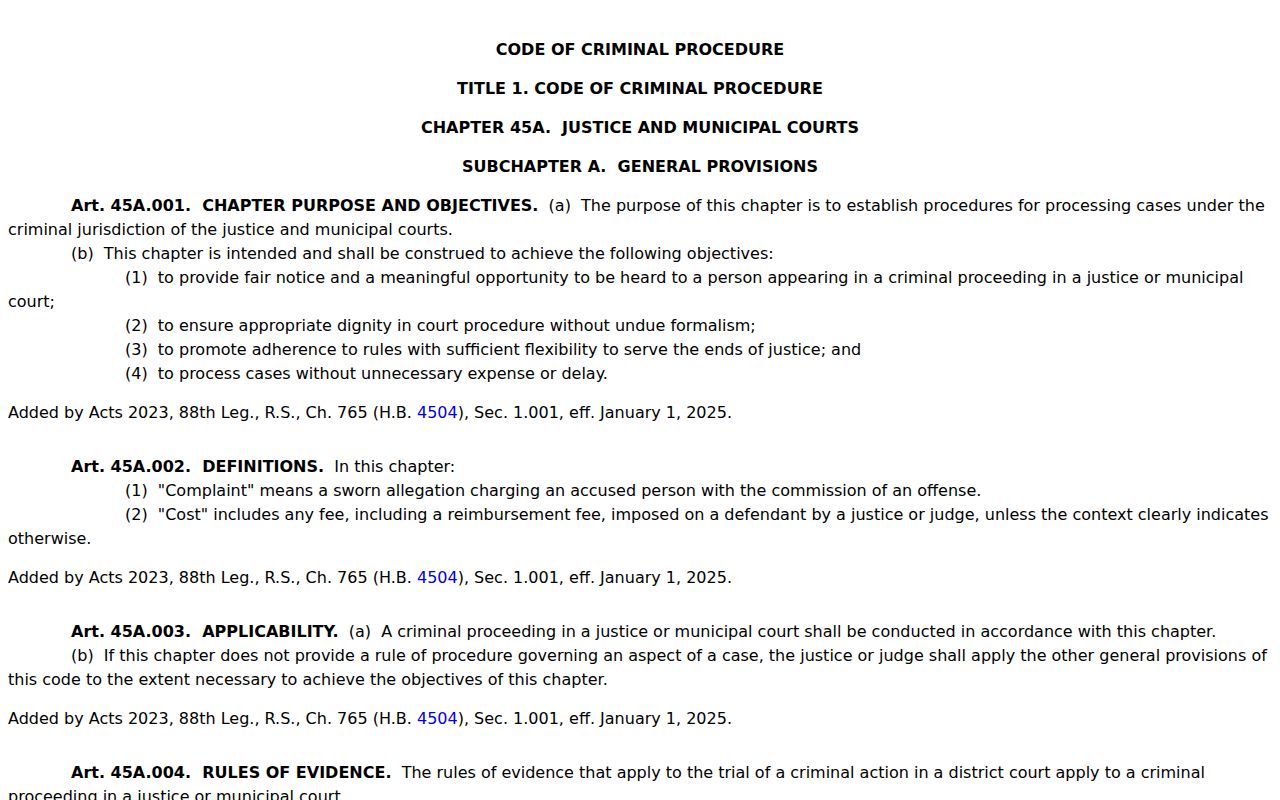
Chapter 45A governs parts of justice and municipal procedure, and Stonewall County local practice still has to be confirmed.
Arrest Warrant vs Summons vs Bench Warrant
A summons directs a person to appear. An arrest warrant authorizes custody under a court order. "Bench warrant" is common shorthand for court process after a missed obligation, so ask the Stonewall County clerk for the exact instrument. These terms are not interchangeable, and the right response depends on the case.
| Feature | Arrest Warrant | Summons | Bench Warrant |
|---|---|---|---|
| What It Orders | Take the accused before the proper authority. | Appear at a stated time or answer the charge. | Bring a person before the court after a court obligation. |
| Basis | The required probable-cause process. | A court's choice to require appearance without custody. | A failure to appear or comply under the case procedure. |
| Who Issues It | A magistrate or court. | The authority allowed by the applicable process. | The judge or magistrate in the existing case. |
| How to Respond | Confirm status and options with counsel and the issuing court. | Follow the appearance instructions on the summons. | Ask the court about appearance, hearing, bond, or recall. |
Stonewall County Courts Hold Separate Cases
Court structure matters when you chase a warrant in Stonewall. The 39th District Court covers four counties, and Stonewall is one of them. County Court and the countywide Justice of the Peace operate on their own tracks, while Aspermont takes care of municipal matters through its city court. A citation written by a city officer does not become a JP case on its own. Look at the court named on the citation or cause paper first; that tells you which clerk to call. A federal matter sits outside all of this. No county search or sheriff contact will confirm a federal warrant, since federal case records carry their own public-access limits. For contact details, the Texas Courts directory search lists court offices, though it returns no warrant results.
Stonewall County Arrest Records by Cause
Want a paper trail? A written request in Stonewall County can target a specific document tied to a cause number: the warrant itself, a return, a bond order, a recall order, or a docket entry. Name the court and the date range. Ask for exempt details to be redacted, and request a cost estimate up front. The County Clerk's general online search is not a warrant database, so it will not answer this for you. Two limits matter here. Juvenile arrest-warrant records, along with complaint and affidavit material, carry special confidentiality under Texas Family Code section 58.010, and active investigation information can fall under an exception too. Follow the Texas Attorney General's written request instructions, and ask the court directly for whatever public portion it holds on your Stonewall County cause.
Resolve a Stonewall County Arrest Warrant
Take the cause number to the issuing court. Ask whether the warrant is still active and what the court wants done. A Texas criminal-defense attorney can weigh a voluntary appearance, bond, or a motion to recall or quash. Stonewall County posts no bond schedule, surrender counter, or warrant fee, so confirm costs with the court before you pay or appear.
Important: Do not rely on a blank website result. Confirm status with the issuing court and get legal advice before arranging an appearance or surrender.